Widen the circle before you change the system
Inclusive Adaptive Capacity: organizations adapt only as far as they included people before the adaptation began.
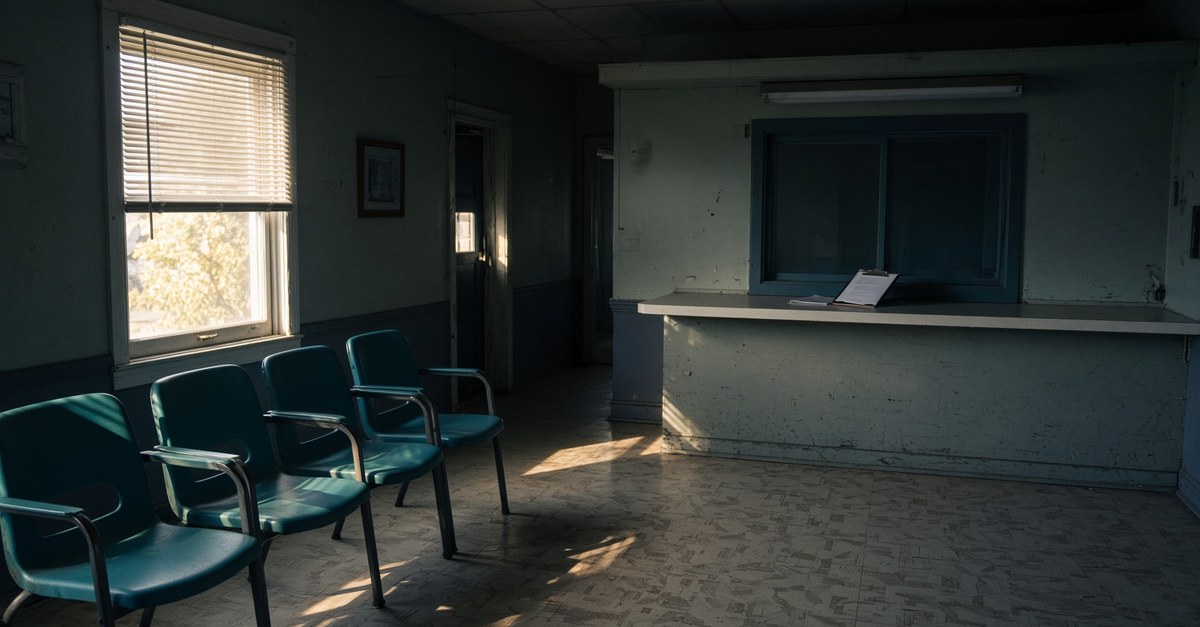
I used to treat speed as a virtue. Get the titled people in a room. Decide. Move. The organizations I watched that did this looked decisive for about two weeks. Then the decision bounced. The clerk who runs the window had known the bounce was coming. Nobody asked her.
Inclusive Adaptive Capacity is the name I put on that pattern, and later tested through doctoral research. An organization’s ability to adapt is bounded by how widely it includes voices before it adapts. Not after the announcement. Before the choice.
It is easy to misread this as niceness. It is not niceness. It is a hard limit on how far a change can travel. If the people who will carry the change are not in the room when the change is designed, you are not adapting. You are issuing instructions into a system that will route around you.
In Ada the rooms that matter are small. A clinic waiting area. A tribal office with a folding table. A school board that still prints the agenda. The people with the best information about what will break often have the least formal power. Inclusive Adaptive Capacity says you treat that as a design fact, not a courtesy.
There is a cost. Inclusion takes time. Meetings get longer. You will hear things you did not want to hear. Some of those things will be wrong. You still have to sit with them long enough to tell the difference. Leaders who skip this step do not save time. They move the time into the cleanup, where it costs more and teaches less.
I am building sovereign AI infrastructure for nations and communities. The first instinct in that work is to ship a model and call it access. A model that was not shaped by the people who will live with its errors is not access. It is a new dependency wearing a friendlier label. The test I run before anything leaves the shop is simple. Whose voice shaped the adaptation, and whose voice pays if we got it wrong.
When I say widen, I do not mean a survey. I mean a seat. I mean the person who knows why the Tuesday clinic is empty at 2 p.m. is in the design meeting, not in a quote on slide nineteen. I mean the language of the interface is the language of the community, which is why Chikasha sits in the stack as a first-class problem, not a localization afterthought.
Borrowed speed is cheap at the start. You take the default model, the default cloud, the default policy. You look fast. The bill arrives when the default does not know your people, and you cannot change it without asking someone who does not live here. Inclusive Adaptive Capacity is the practice of refusing that bargain early, when it still looks inefficient.
Psychological Safety is the channel this construct travels through. A seat in the room is worthless if using it is punished. I have watched “listening sessions” where everyone understood that the real decision had already been made. That is not inclusion. That is a recording of inclusion. The adaptation that follows will be as thin as the session.
The four people I do this work for never sat in a product meeting. They are why the meeting has to be wider than the people who look like product. A health OS that cannot hear a family caregiver is not a health OS. It is a billing assistant with better copy.
I write this from Ada, Oklahoma, on Chickasaw land. The circle here is not a metaphor. It is a set of names. If the work cannot hold those names, it is not sovereign. It is just remote.
Widen first. Then change. The other order is how you get a fast system that no one will tell the truth to.