Developers are circling tribal land. Here is what they miss.
Outside developers see cheap land and favorable regs. A sovereign node is something different: infrastructure the community owns and operates.
Developers are eyeing Native nations and tribal communities for new data center projects. News From The States reported it this week. The pitch from outside capital is roughly the same in every version: land is available, regulations are favorable, the nation gets a lease payment.
That is not a node. That is a tenant.
I want to explain the difference, because it matters more than any headline.
What a tenant arrangement actually builds
When an outside developer builds a data center on tribal land and operates it, the tribe gets rent. The compute stays under someone else’s key. The data flowing through that facility, including health data if the tribe runs a clinic or a hospital, is governed by the developer’s terms of service, the developer’s incident response plan, the developer’s uptime SLA.
The nation holds the deed to the dirt. The developer holds the clock.
I wrote last week that the company that owns the rack owns the clock. This is the same problem at a larger scale.
What a sovereign node actually is
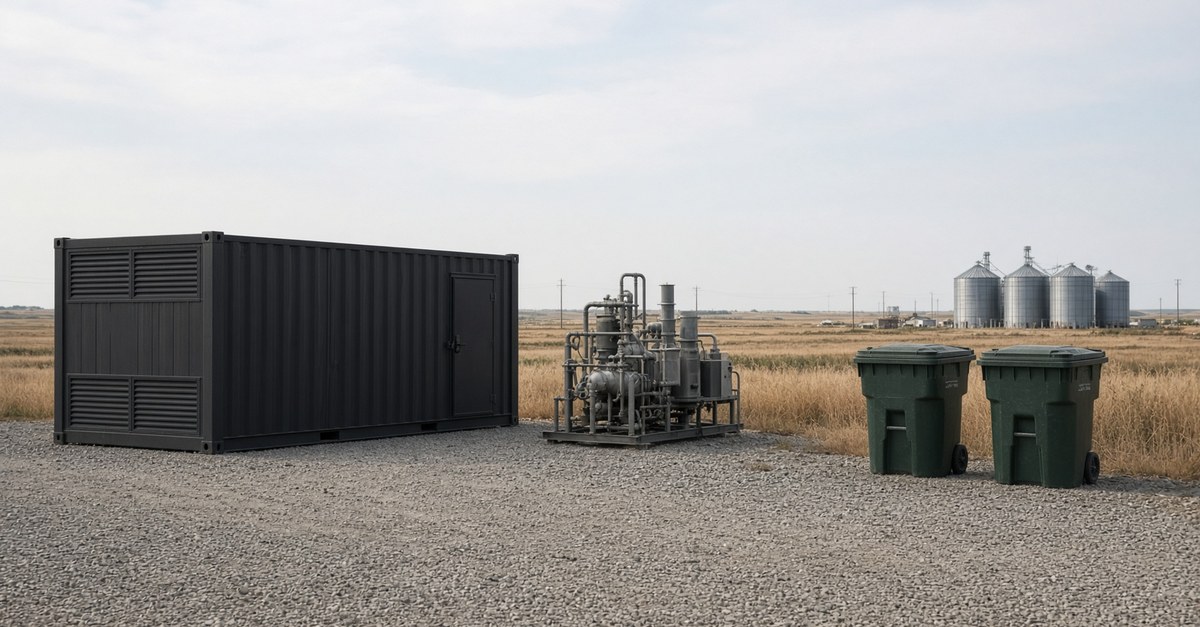
A sovereign node is a closed-loop containerized unit. Compute, cooling, and power inside one footprint. Waste-to-energy conversion turns municipal solid waste into electricity. Thermal exhaust drives absorption cooling. Wastewater distillation produces potable water. Energy cost: zero. Cooling cost: zero. Water cost: zero or net-positive.
The software stack runs inside that container. AES-256-GCM encryption runs client-side, before any AI processing touches the data. Raw PHI never leaves the node. The community holds the encryption keys.
Append-only audit logs. No vendor back door. No cloud API call routing data through a server farm in Virginia.
That is what I mean by sovereign. Not a brand modifier. A technical and legal condition.
Why Native ownership is structural, not symbolic
Sovereign Shield Technologies is Chickasaw-owned. Our infrastructure partner, Copious Specialties, is Cherokee-owned. That combination creates procurement pathways, nation-to-nation data agreements, and federal trust responsibility channels that no outside developer can acquire by signing a ground lease.
You cannot buy your way into Indigenous-led status. You can buy land. You cannot buy the relationships, the citizenship, the standing in tribal courts, the governance trust that comes from being of the nation you are building for.
Outside developers circling tribal land right now are reading the same Department of Energy materials I read. They see opportunity. Some of them will close deals. Nations will get lease payments and call it economic development.
And in ten years, when the outside operator decides to renegotiate terms or exit, the nation will have no keys, no models, no data sovereignty, and no infrastructure it controls.
Building the next hyperscaler one node at a time
The manifesto headline is literal. One node. Ada, Tishomingo, or the Cherokee Nation, first. A single containerized unit generating conservative annual revenue of $3.8 million to $5.0 million per node. Payback in two to four years. Each subsequent node gets easier because the first one exists.
Hyperscalers did not start with hyperscale. They started with one rack, one data center, one region. They scaled because the architecture was right, not because the land was cheap.
The architecture here is right because it is closed. Energy closed. Water closed. Data closed. The community holds the keys at every layer.
Pick up enough crumbs, you get a loaf of bread.
Outside developers are circling. I am not interested in circling. I am interested in building infrastructure that a nation’s grandchildren will still own.
That is the difference between a tenant and a node.
Get the journal by email
One email when there is an entry. Nothing else. No pitch. Unsubscribe whenever you want.